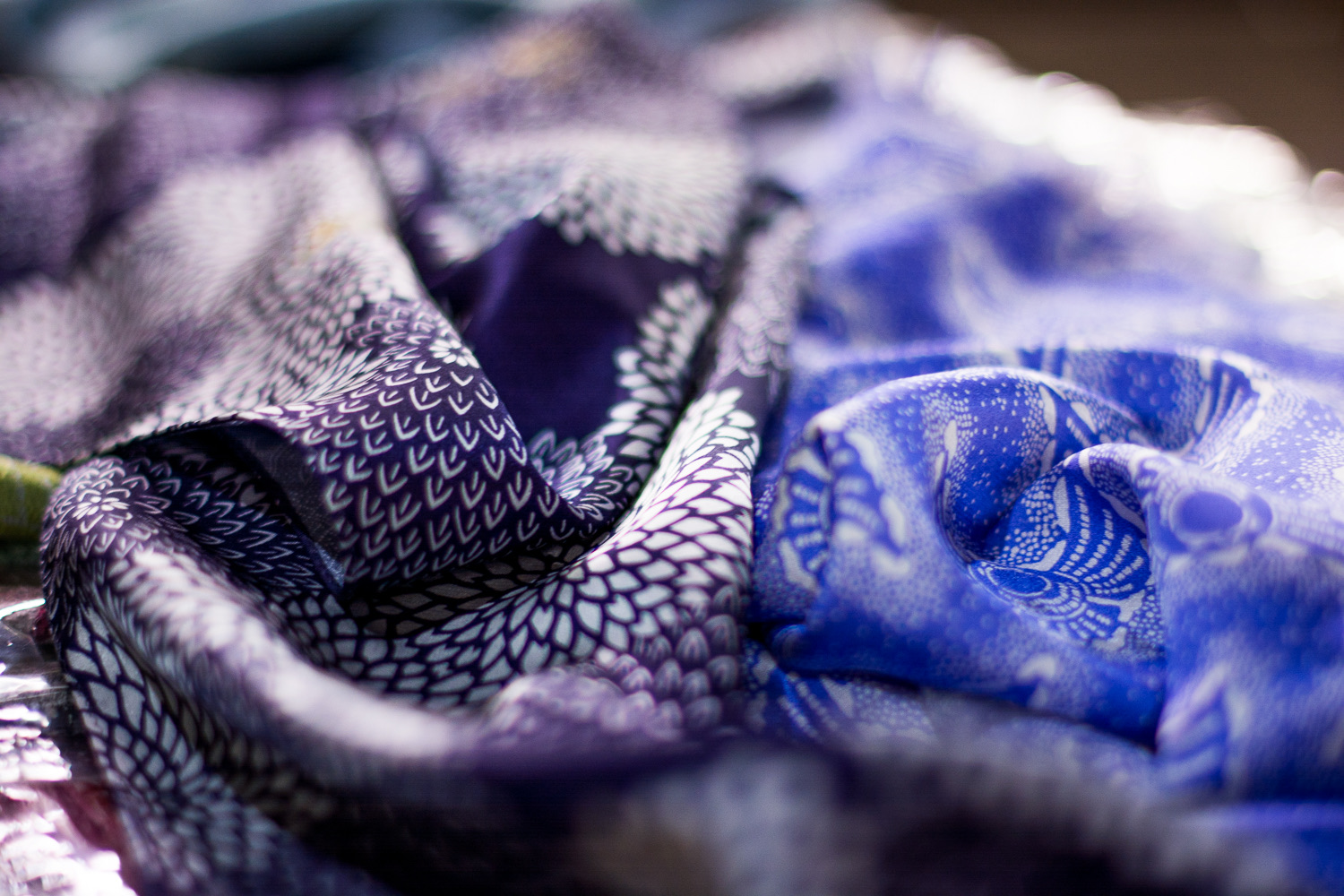
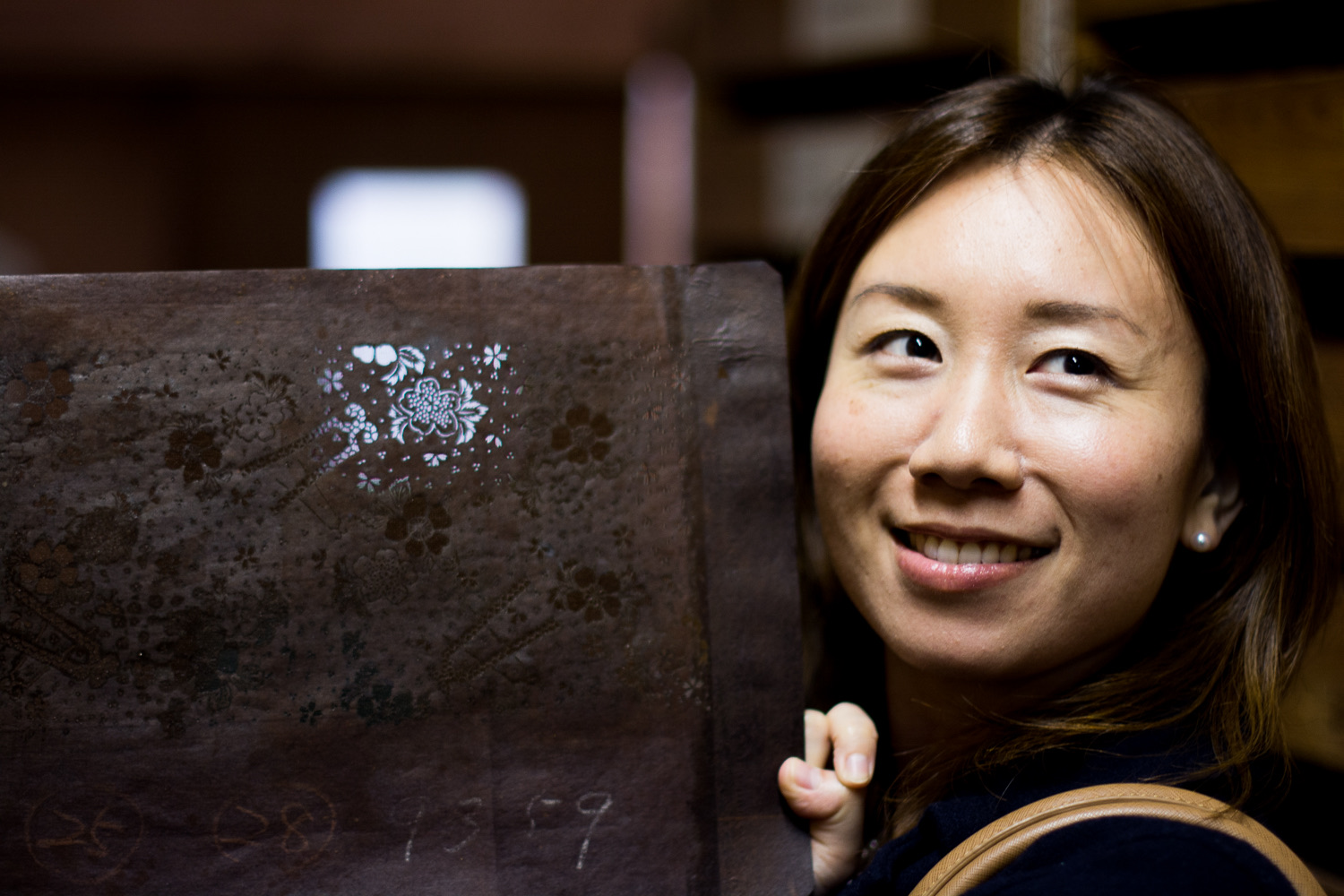
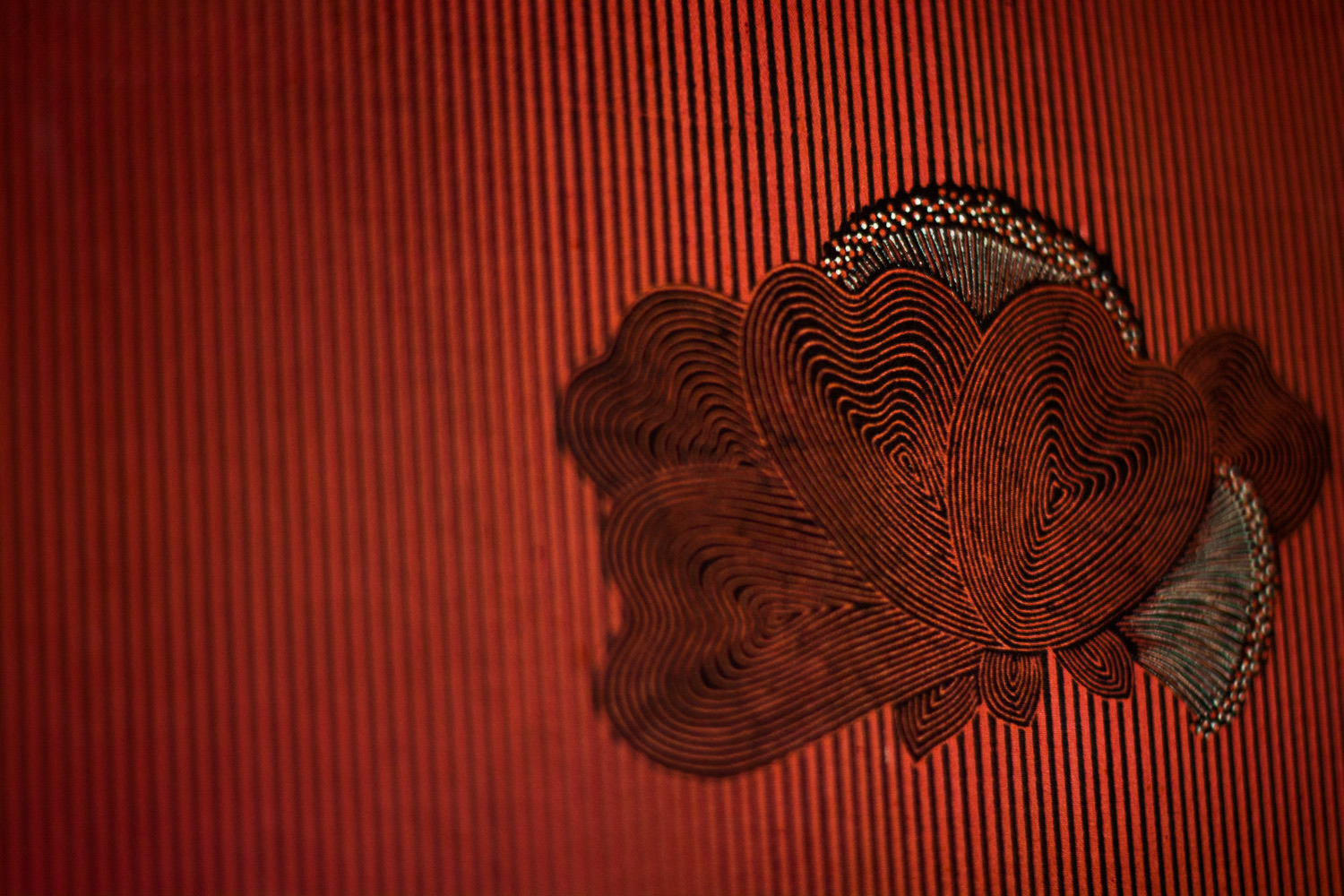
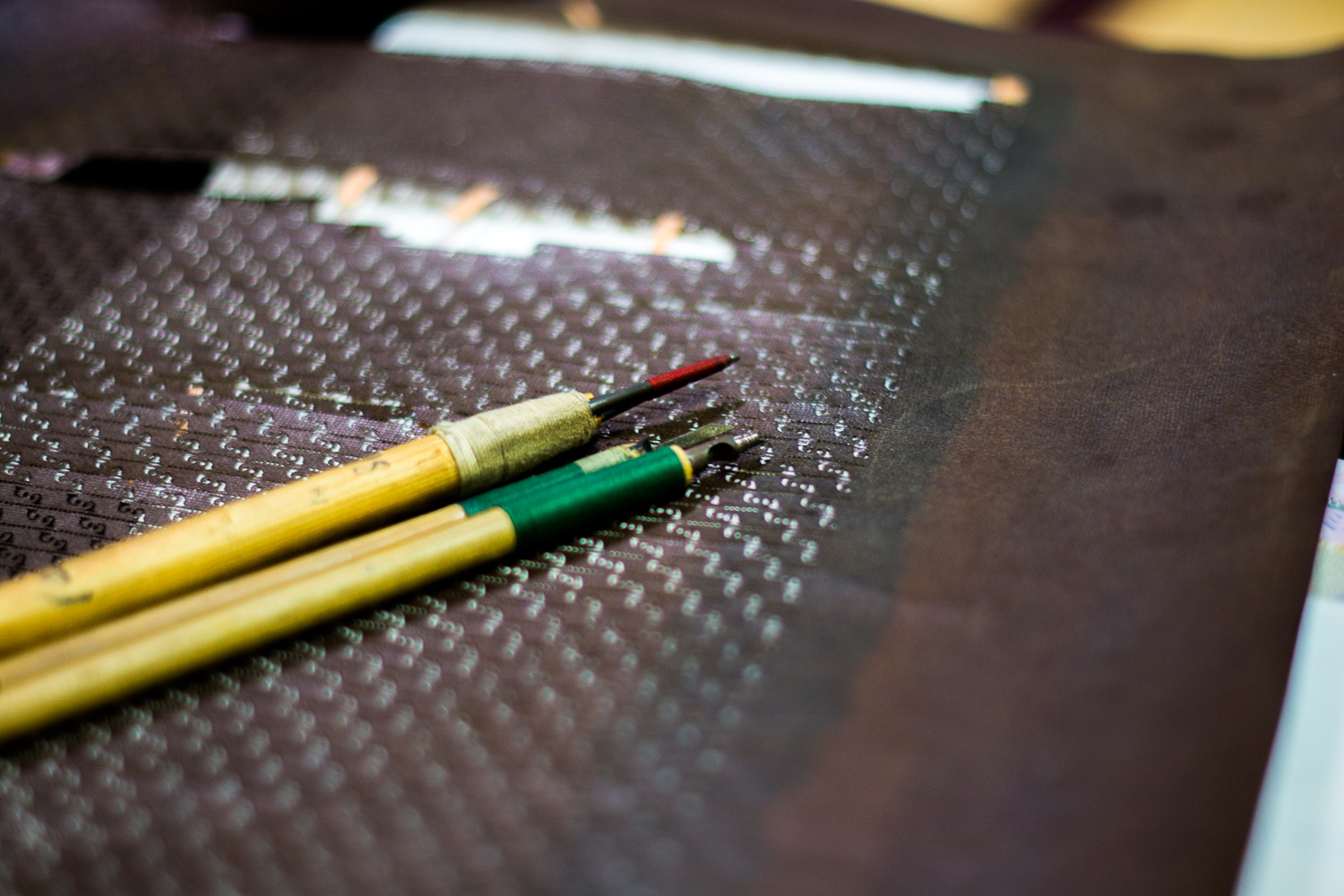
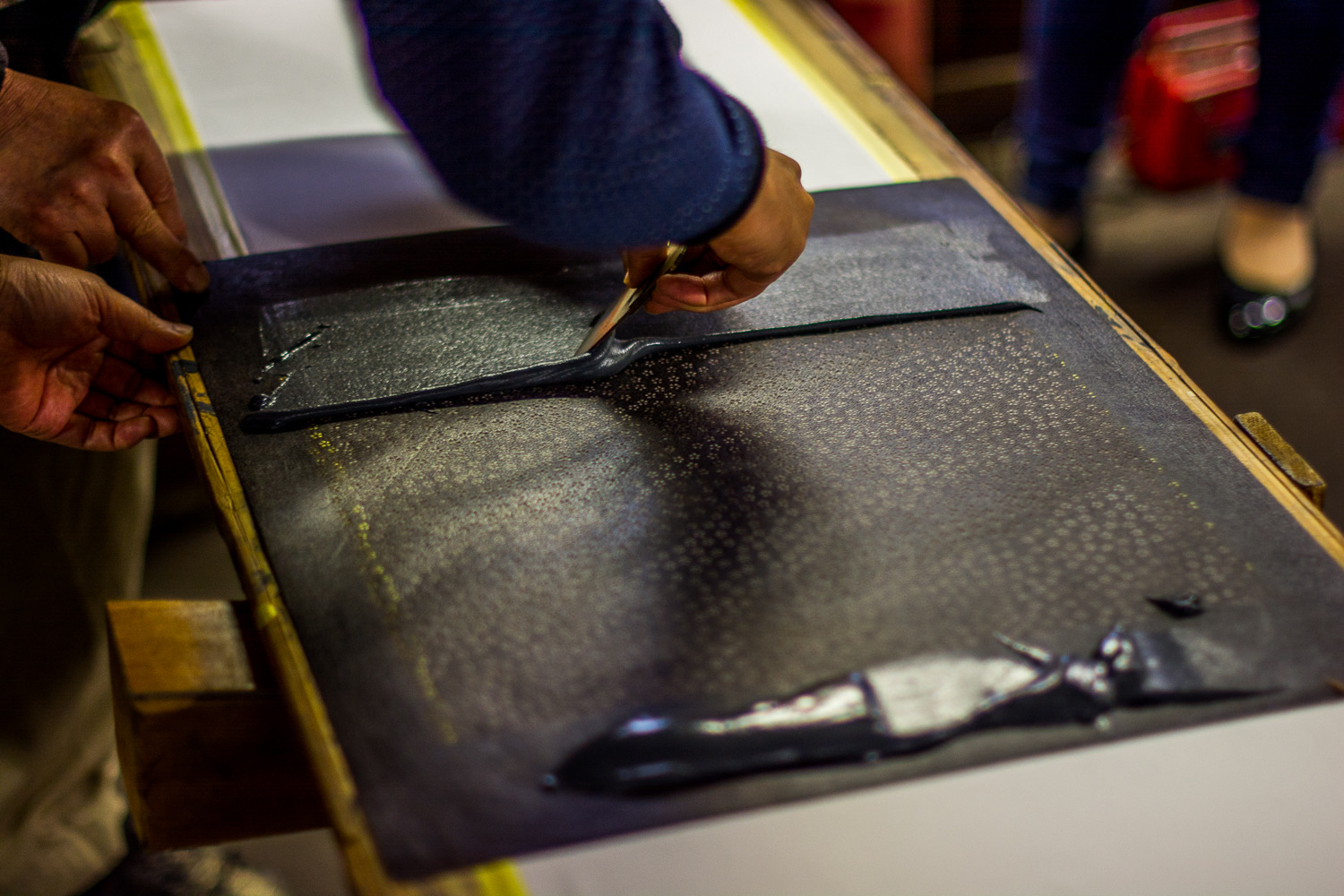
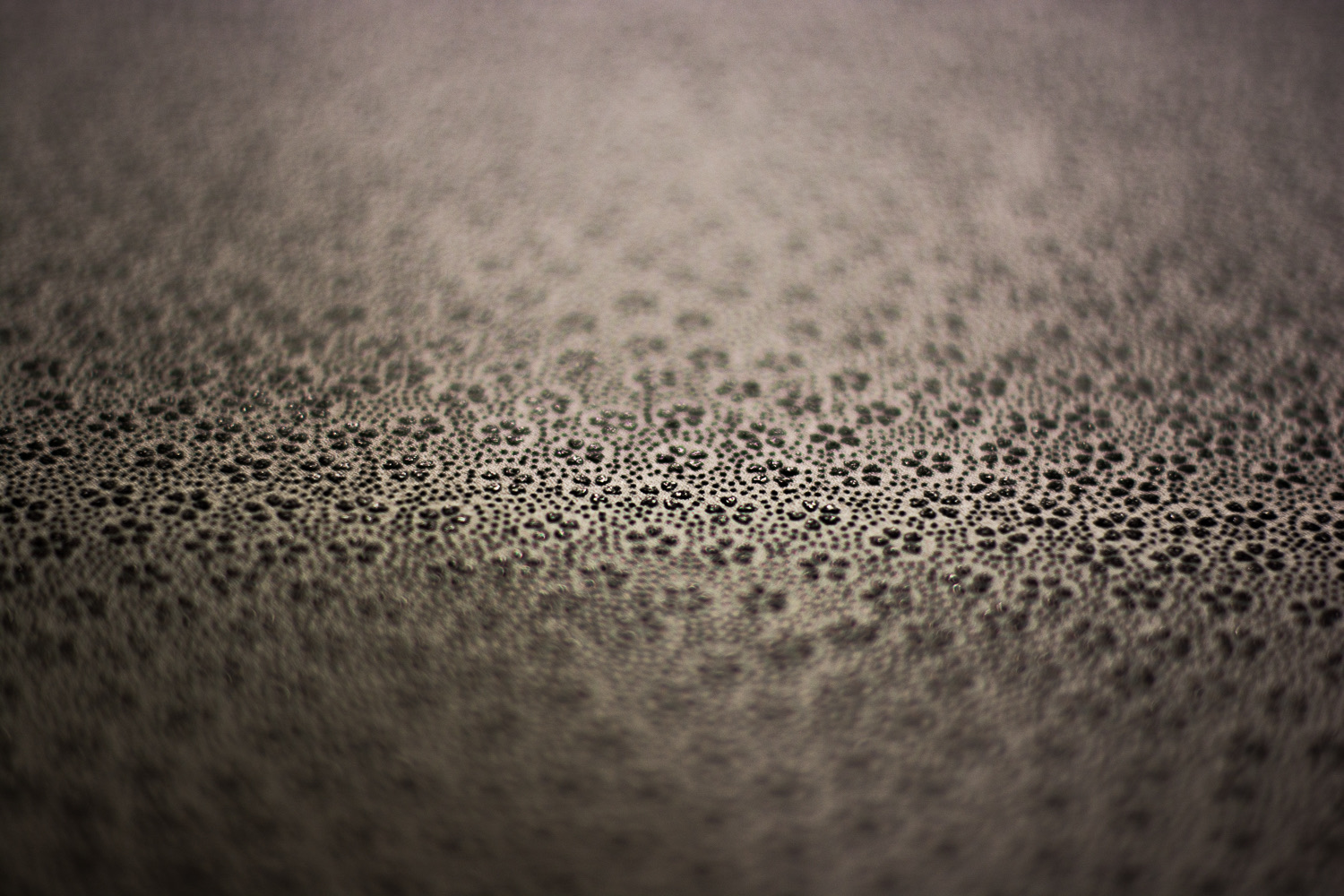
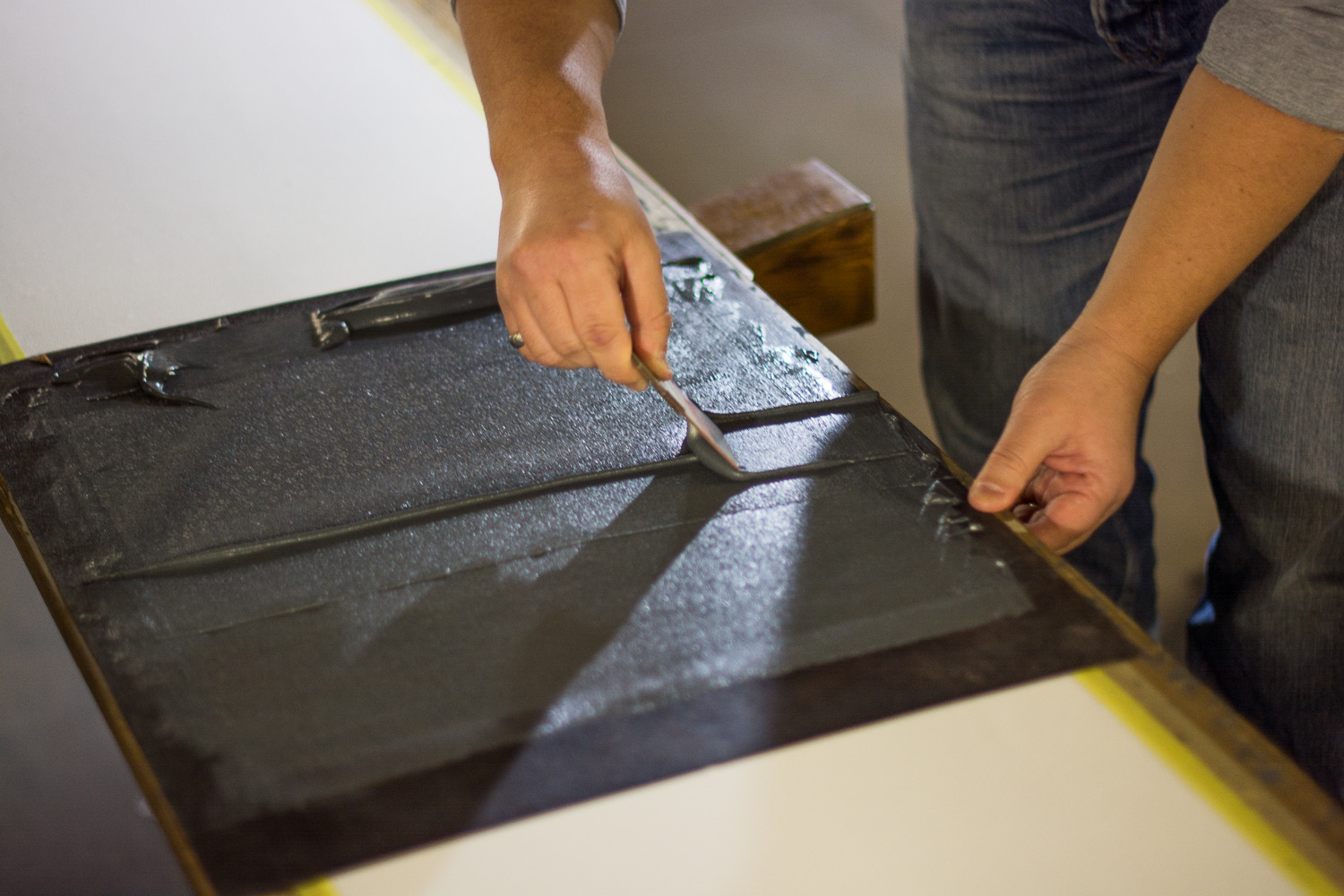
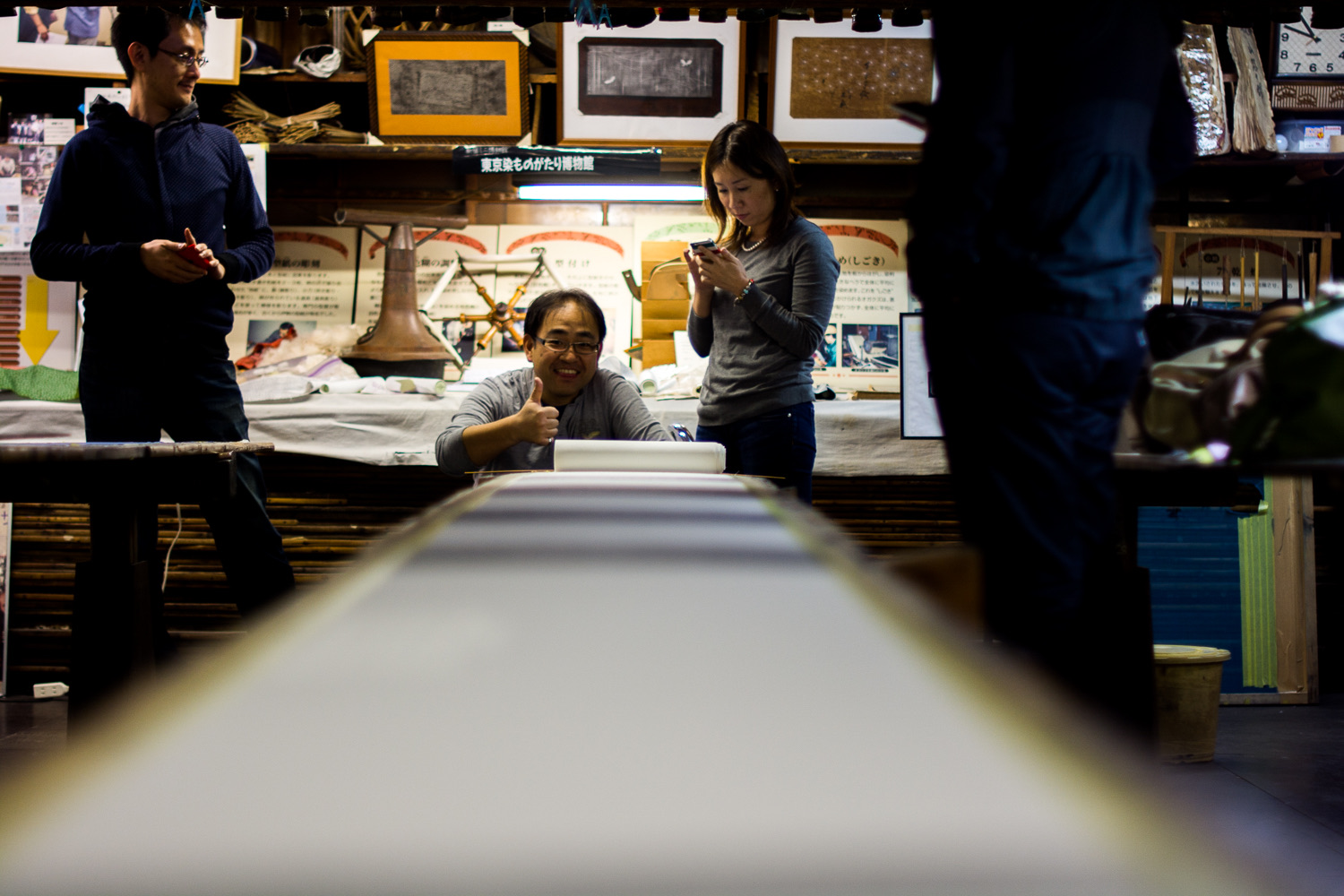
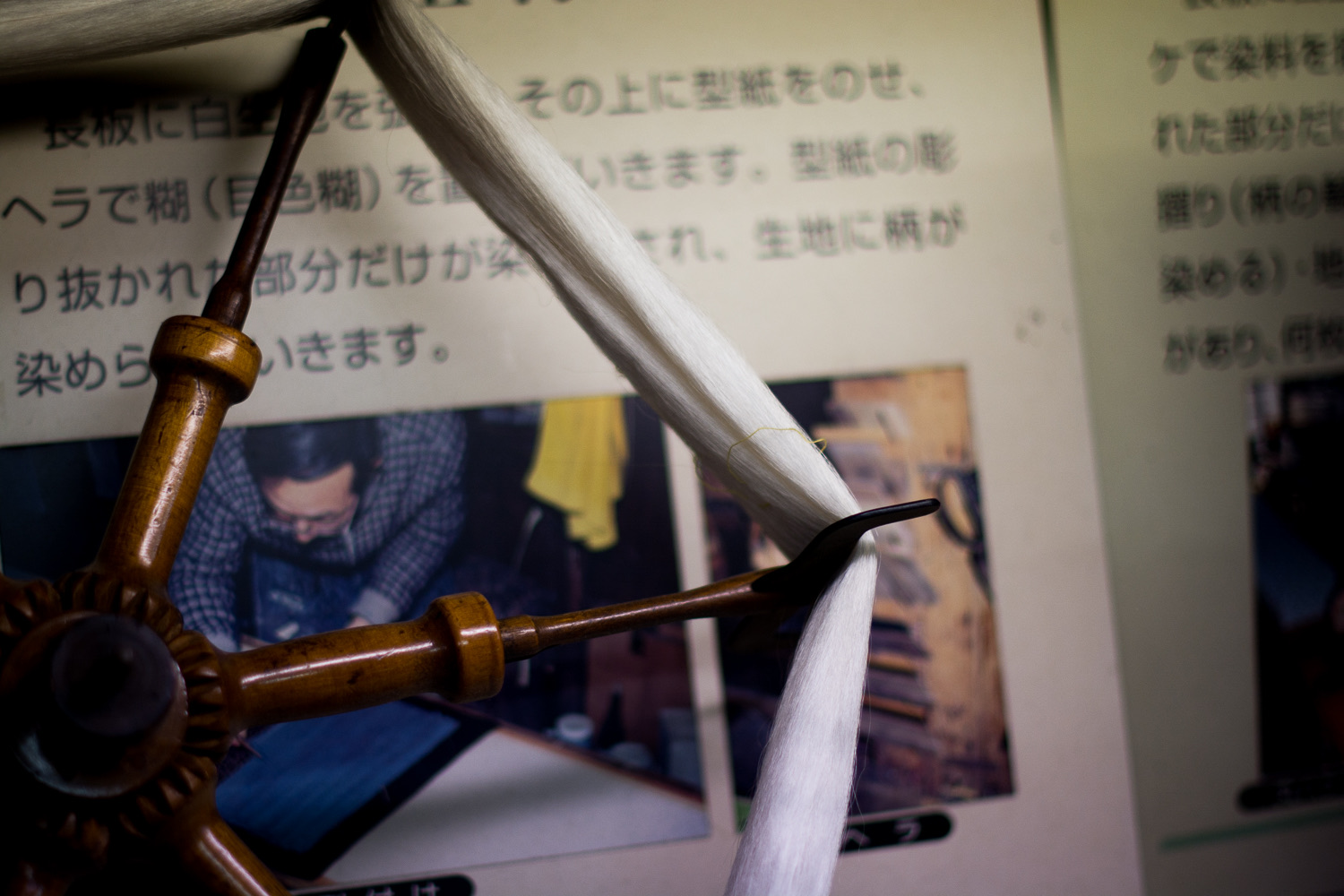

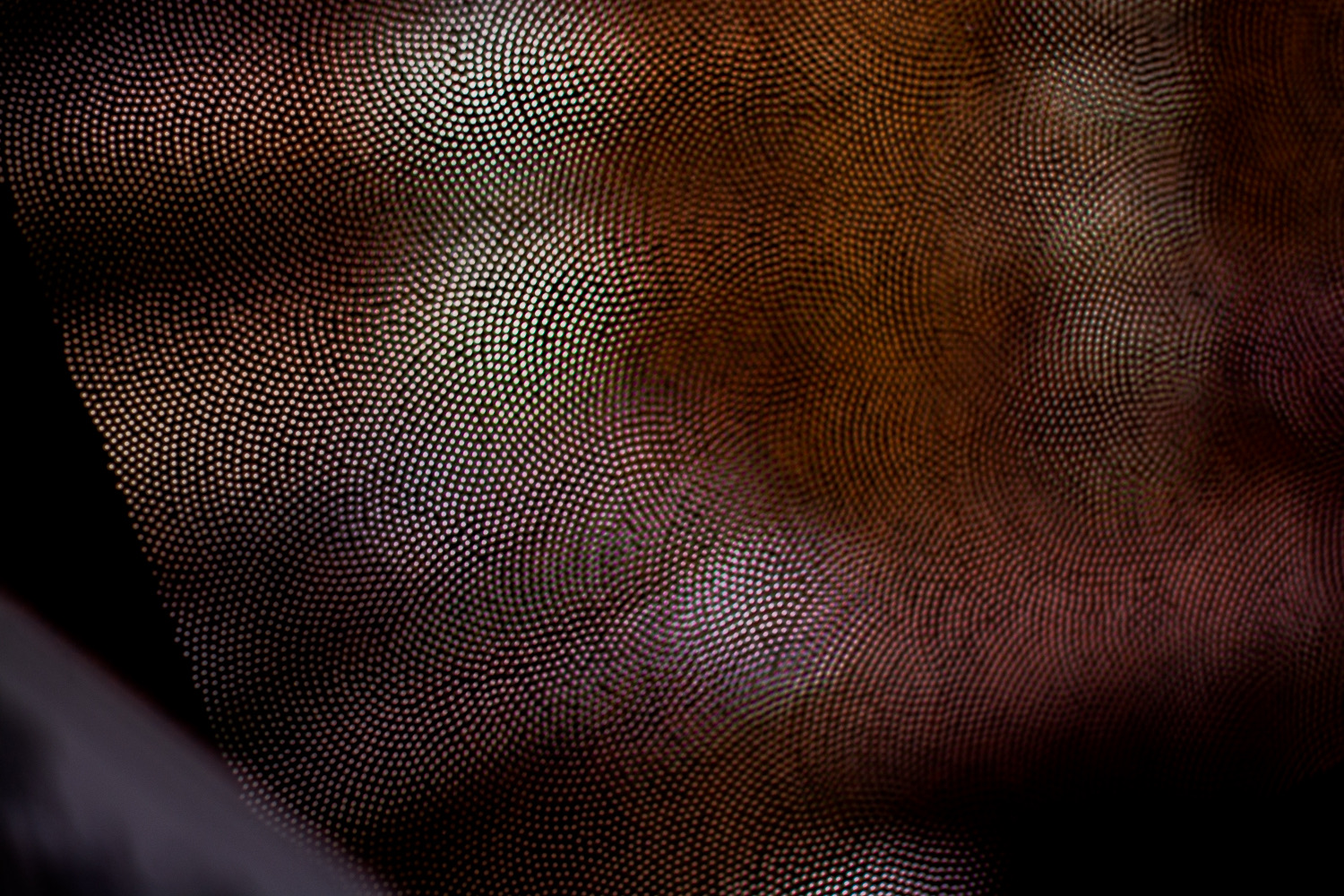
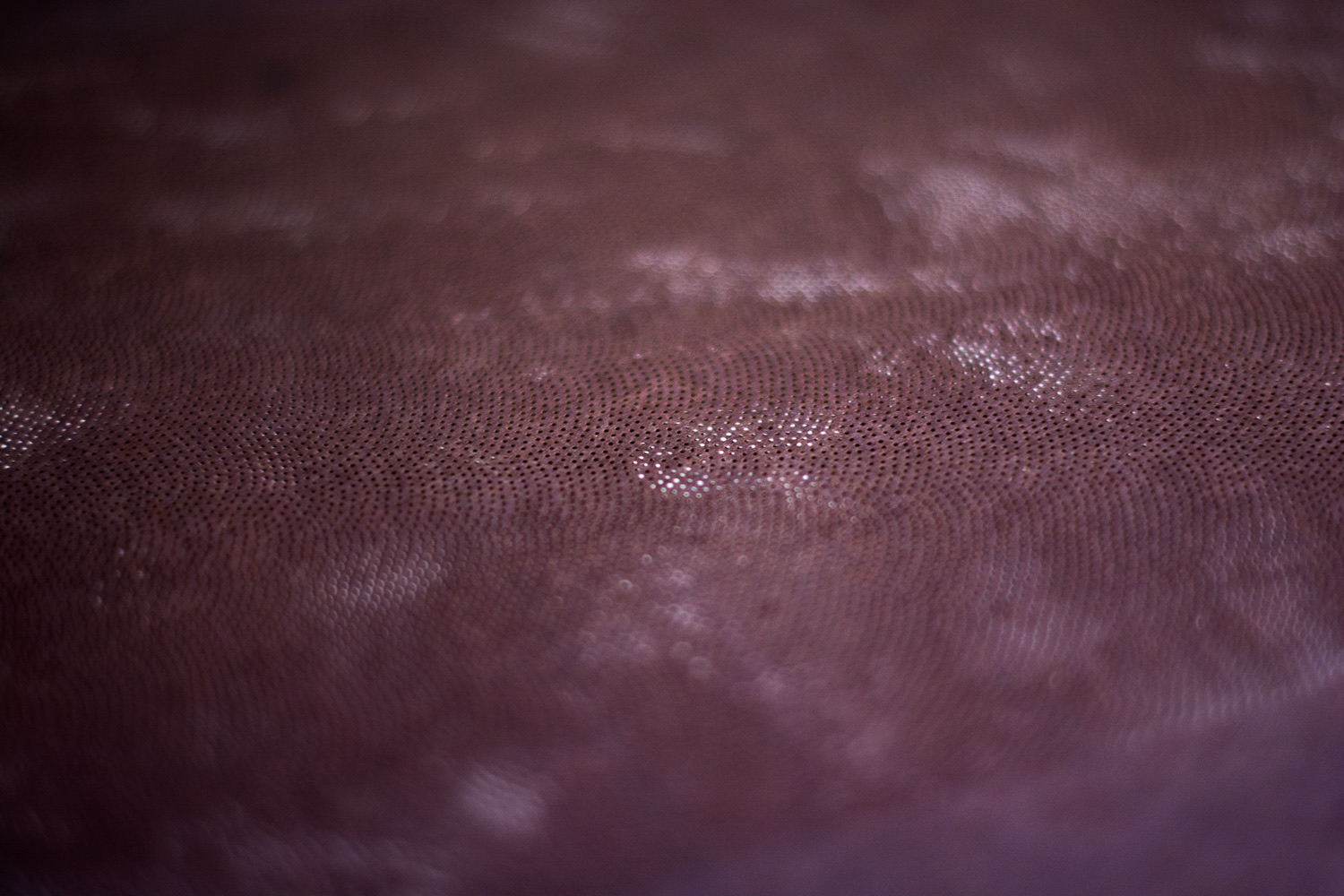
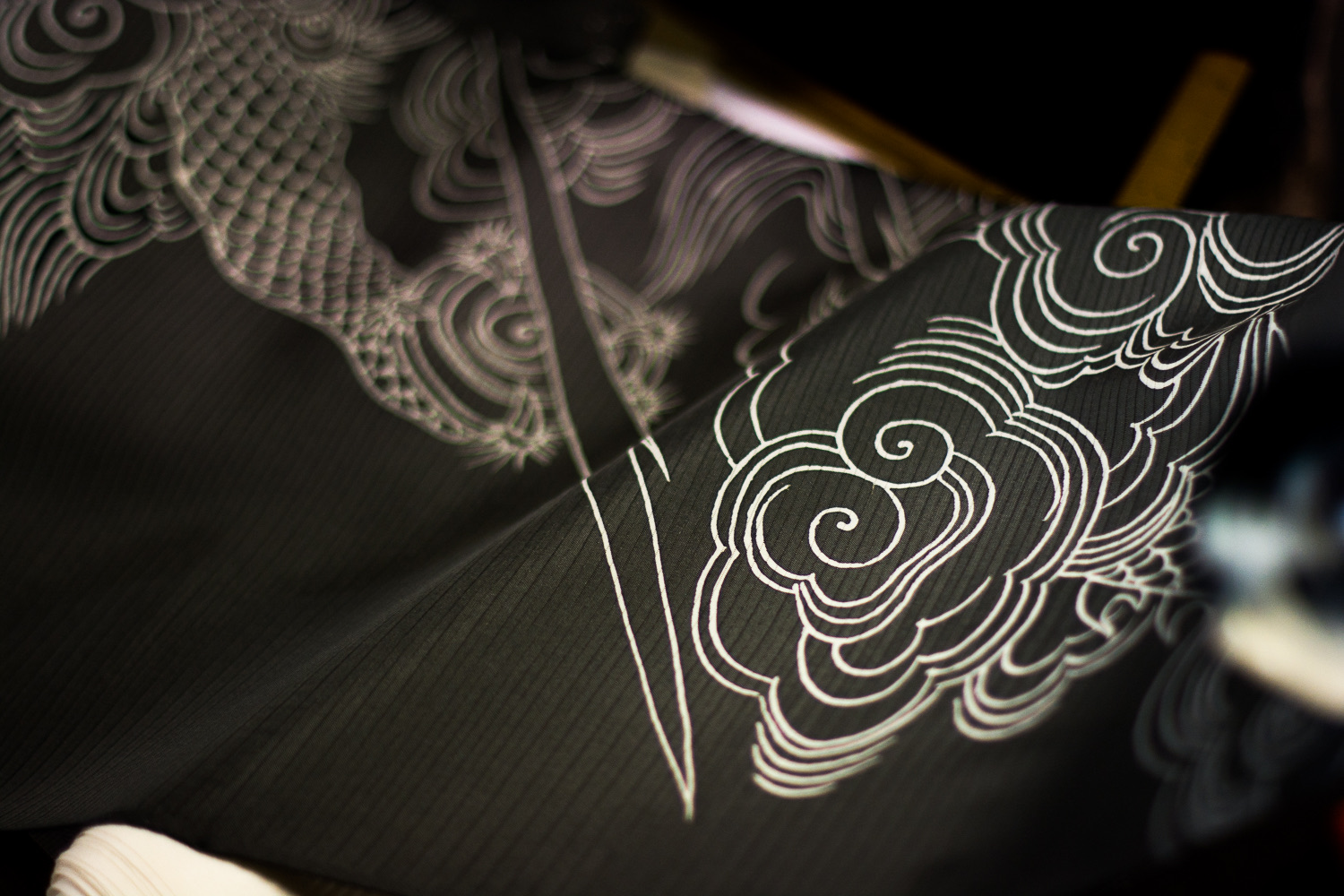
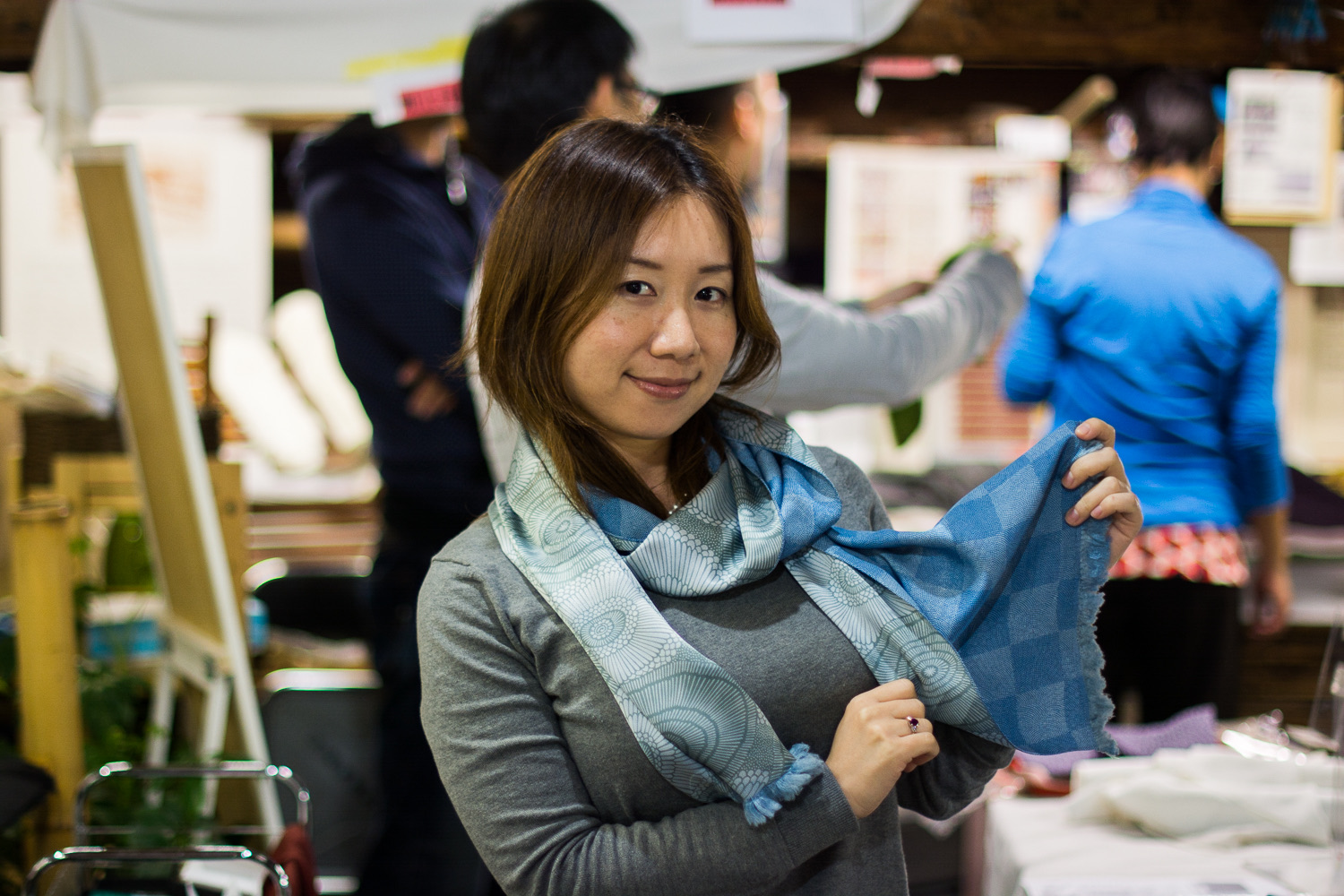
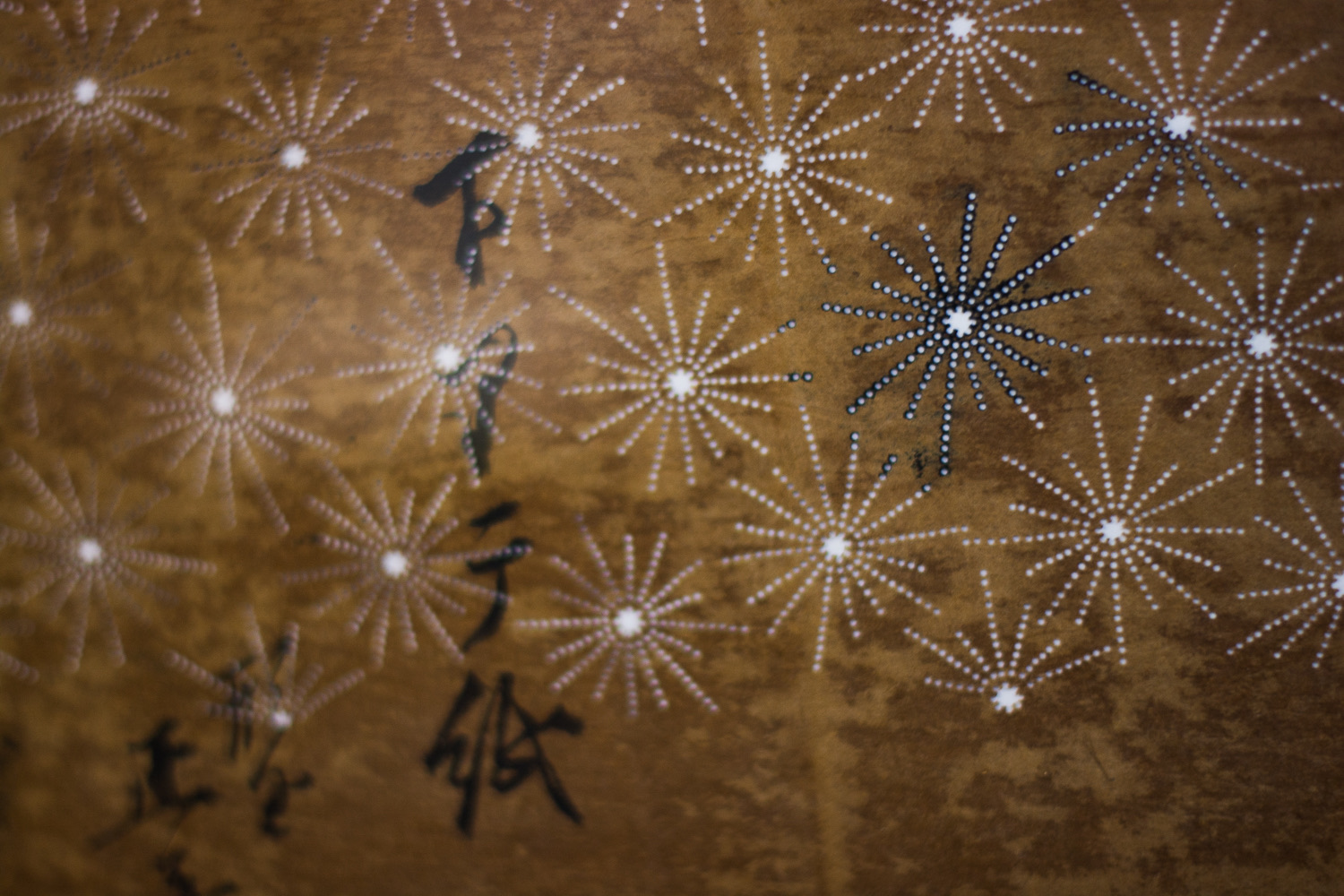
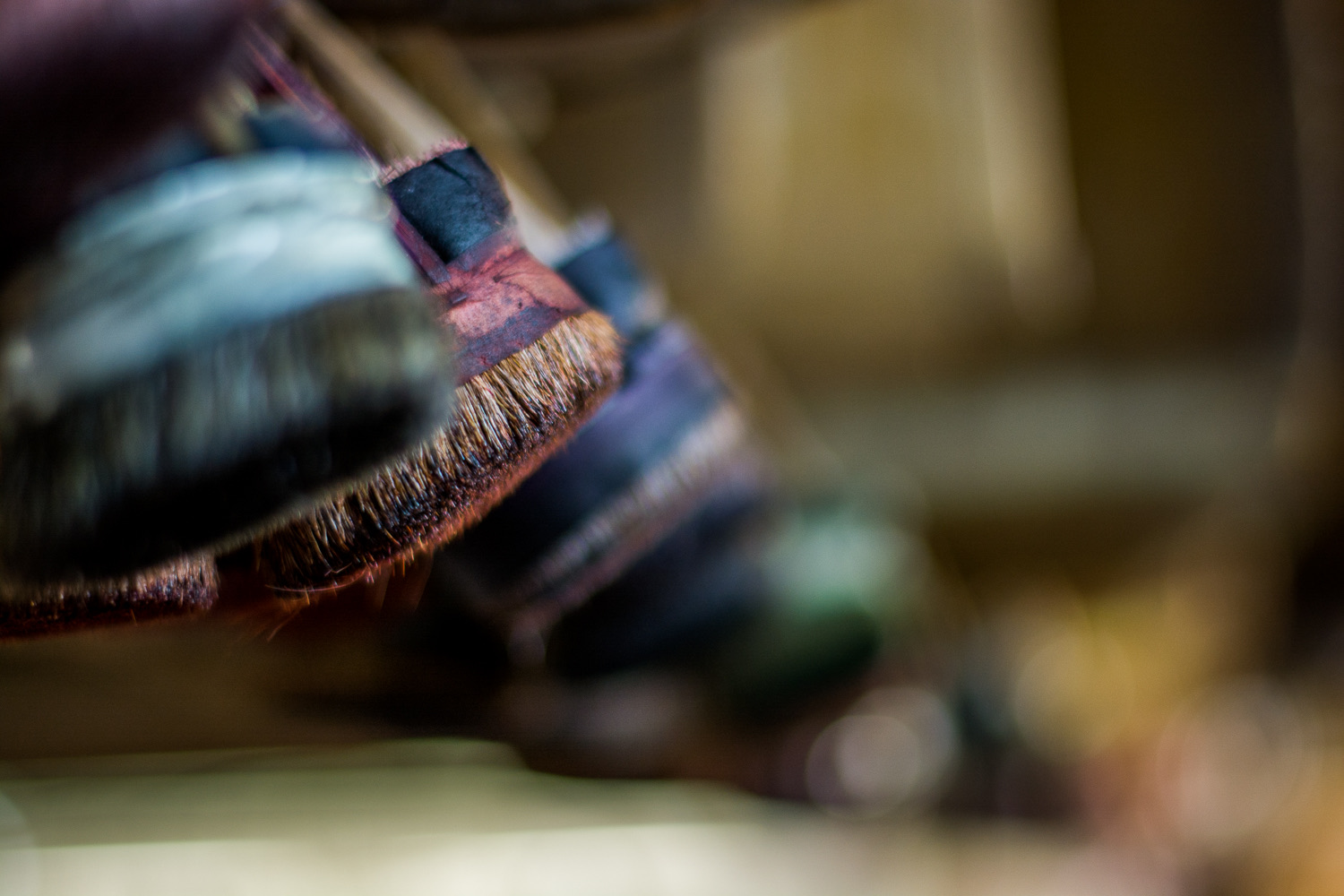
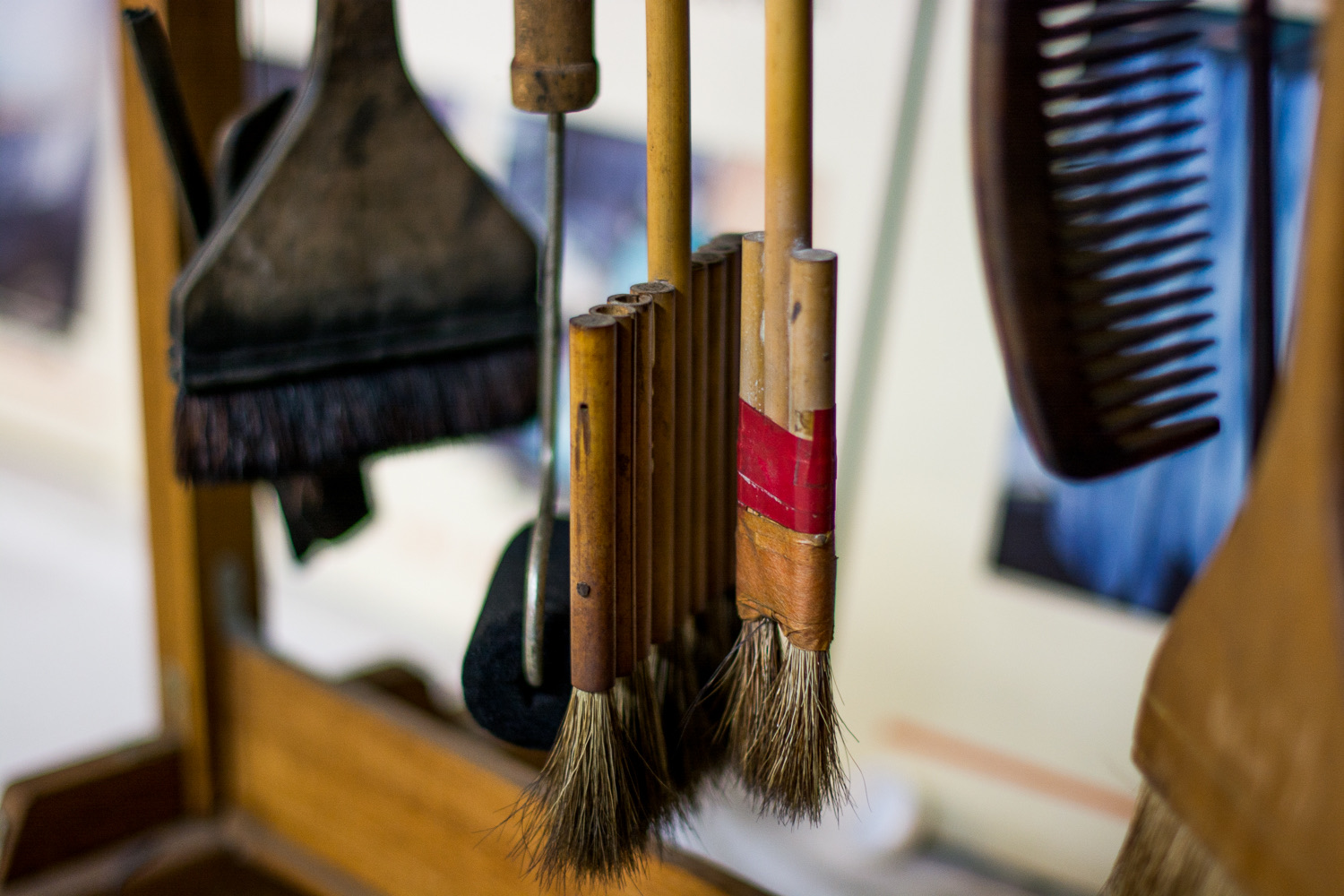
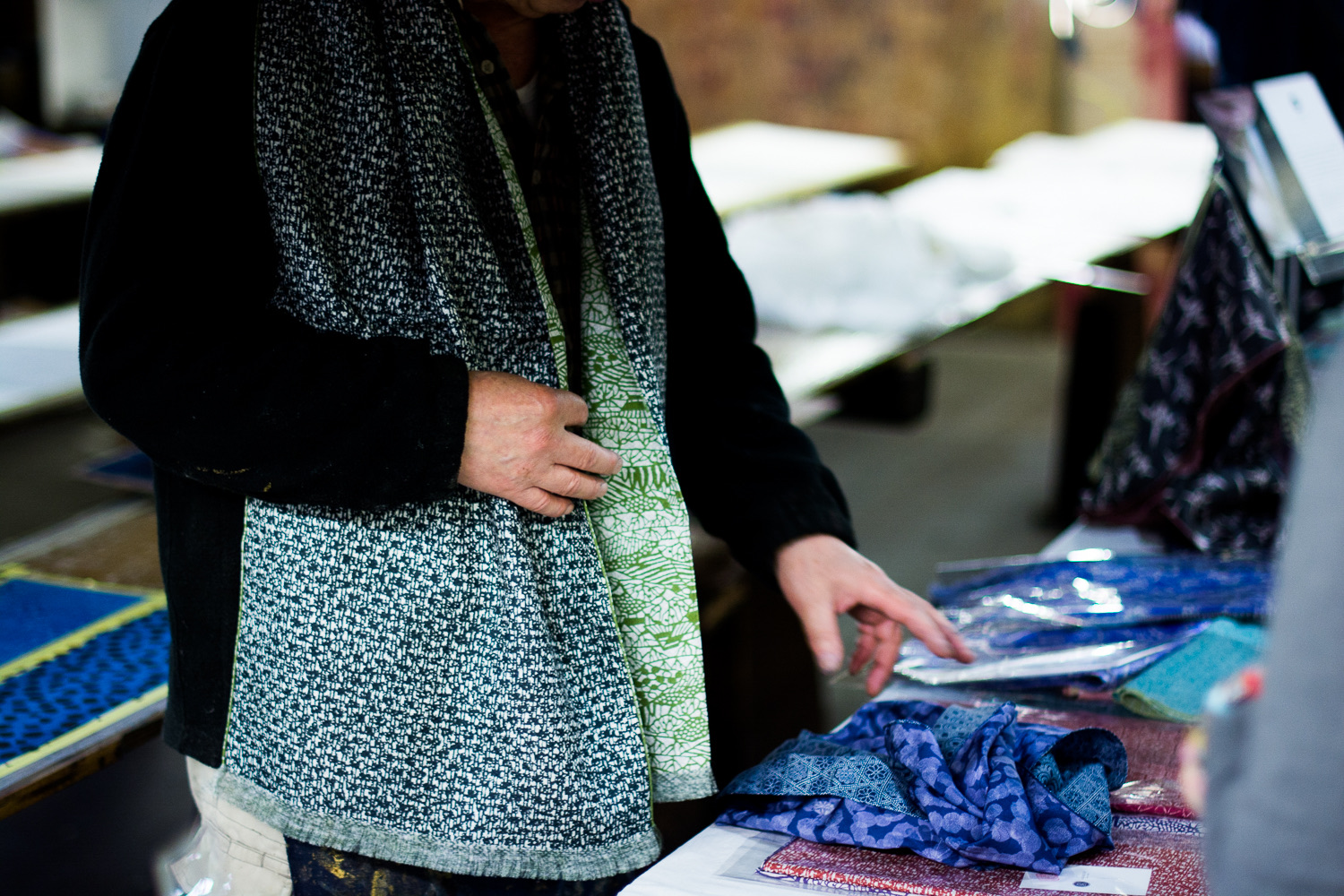
The root of Edo Komon (or Tokyo Some Komon) goes back to the Muromachi period, from the 14th to the 16th century. It was at first used as kamon, family crests, or leather sword fittings. In the latter half of the Muromachi period, samurai, the warrior class, began to use them as daily clothes. In Edo period, komon was used for kamishimo, which was a samurai’s formal wear, and was developed as a traditional art. There are three types in katazome, pattern dyeing.
They are daimon, nakamon and komon. Daimon is the biggest pattern, whose diameter is more than 2.3cm. Nakamon is a middle pattern and komon is the smallest. The daimon costume with a big family crest pattern, was a primary formal wear of samurai. When Ieyasu Tokugawa started the Edo government, his frugal policy also affected the samurai costume, and daimon costume was taken place by kamishimo costume. Komon patterns, such as arare (hail), same (shark), kagome (basket net), were used for kamishimo. Each samurai family had its own pattern, and they were not allowed for other families to use them.
As each family competitively developed original designs and technique, komon was greatly developed into an artificial craft In the mid-Edo period, people began to adopt the dignified samurai komon into their ordinary life. Iki (chic) and sense of freedom was added to komon. With the Meiji Restoration of 1868, komon craftsmen around the country headed for Tokyo to find new customers. The modernized, sophisticated komon kimono with a 600 year tradition are worn for tea parties and chic casual today.